Important things to know
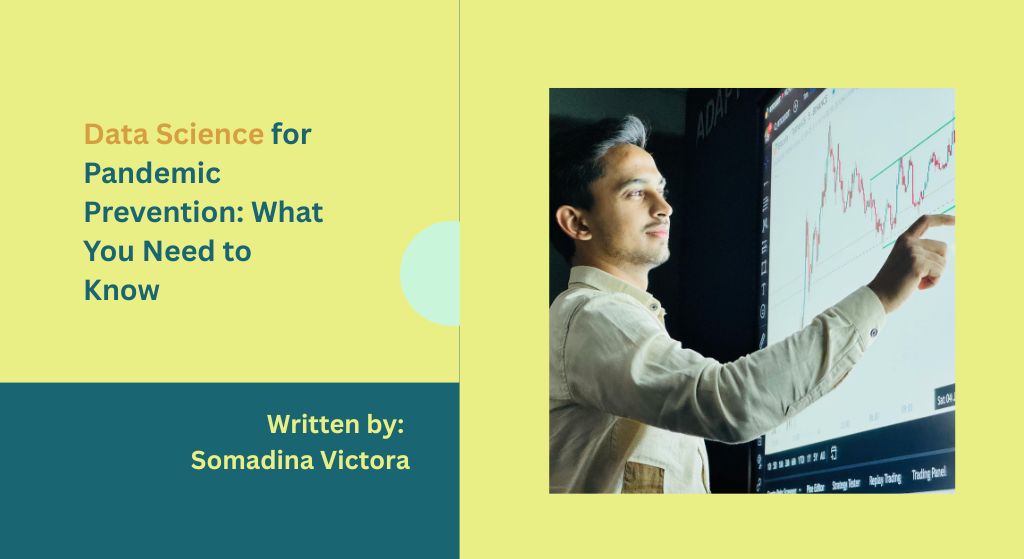
Data science and AI (Artificial Intelligence) is becoming one of the most powerful tools in the fight against global health crises. By collecting and analysing enormous amounts of health data, scientists and public health organisations can detect outbreaks earlier, respond more effectively, and in some cases, stop a disease from spreading altogether. It is not a perfect system, far from it, but the progress made in recent years is genuinely difficult to ignore.
Tracking Outbreaks Before They Explode
One of the most critical things data science does during a pandemic is help experts understand what is actually happening on the ground.
During an outbreak, data scientists track infection rates, identify high-risk areas, and model how a disease is likely to spread across populations. This kind of work sounds straightforward, but in practice it is anything but. Data comes from hospitals, testing centres, mobile apps, travel records, and social media, and pulling all of that together into something useful takes great skill.
Governments and healthcare agencies use these predictive models to make decisions about public safety measures, hospital preparation, and vaccine distribution. When the models are good and the data is clean, the insights can genuinely reduce the impact of an outbreak and save a significant number of lives.
The problem, of course, is that the data is not always clean. Reporting inconsistencies between countries, testing gaps in lower-income regions, and plain old human error mean that even the best models are working with imperfect information. That tension between what the data shows and what is actually happening is something every data scientist working in public health has to wrestle with.
Supporting Medical Research
Beyond tracking, data science has a major role to play in accelerating medical research.
During a health crisis, time is everything. Researchers need to understand how a new disease behaves, what symptoms it causes, who it affects most seriously, how patients recover, and which treatments seem to help. Traditionally, gathering that kind of knowledge could take years. Data science has compressed that timeline considerably.
By analysing patient records, clinical trial results, and genomic data at scale, researchers can identify patterns far faster than any individual scientist working manually ever could. This approach helped accelerate the development of COVID-19 vaccines and continues to inform treatment strategies for emerging diseases.
It is worth being honest here: data science does not do this alone. It works alongside virologists, epidemiologists, clinicians, and public health professionals. The analysis only becomes useful when it is connected to real scientific and medical expertise. But as a supporting tool, it has proven its value.
New to data sciece, this article gives insight on How to Transition into Data Science from Non-Tech Role
Real-Time Data and Wearable Technology
Something that has shifted significantly in recent years is how much health data people are generating without even thinking about it.
Mobile applications and wearable health devices, smartwatches, fitness trackers, continuous glucose monitors, collect real-time information about heart rate, sleep patterns, activity levels, and more. In aggregate, this data can serve as an early warning system for public health trends.
During the early stages of COVID-19, some researchers found that changes in resting heart rate data from wearables appeared to flag illness before formal testing even occurred. That is a remarkable thing, even if the signal was noisy and the methodology was still being debated.
This kind of passive, population-level monitoring raises genuine questions about privacy and consent that society has not fully resolved. Where does useful public health surveillance end and invasive data collection begin? Those are conversations worth having, and data scientists working in this space need to be part of them, not just the people building the tools.
Lessons From Recent Crises
The COVID-19 pandemic, whatever else it was, demonstrated both the potential and the limits of data-driven public health response.
On the positive side, the global scientific community shared data at an unprecedented rate. Genomic sequences were published openly, dashboards tracking case numbers became genuinely useful communication tools, and international collaboration on vaccine development moved faster than at any previous point in history.
On the other hand, the pandemic also exposed significant weaknesses. Data infrastructure in many countries was outdated and fragmented. Racial and socioeconomic disparities in health outcomes were reflected in, and sometimes obscured by how data was collected and reported. And the sheer volume of conflicting models and projections made it difficult for the public to know what to trust.
These are not arguments against using data science in public health. They are arguments for doing it better.
What the Future Could Look Like
As artificial intelligence, data collection, and international health cooperation continue to improve, the role of data science in pandemic prevention is likely to grow.
Smarter surveillance systems could detect unusual clusters of symptoms across global health networks before an outbreak becomes a crisis. More sophisticated models could help allocate medical resources more fairly and efficiently. Faster genomic analysis could help scientists characterise new pathogens within days rather than weeks.
None of this happens automatically. It requires investment in public health data infrastructure, international agreements on data sharing, and a genuine commitment to addressing the inequalities that make some populations far more vulnerable than others.
Data science is not going to prevent every future pandemic. But used well, combined with strong public health systems and political will, it is one of the most promising tools we have.
The Human Side of Data Science in Health
It is easy to talk about data science in abstract terms, algorithms, models, pipelines, and lose sight of the fact that behind every data point is a person.
When a hospital reports a new case, that is someone's parent, partner, or child. When a model predicts a surge in hospitalisations, it is describing something that will happen to real people in real communities. Keeping that in mind is not just a matter of ethics; it is also a matter of doing better science.
Some of the most important advances in pandemic preparedness have come from people who combined technical skill with genuine understanding of the communities they were studying. They knew which questions to ask, whose data was missing, and why certain populations were underrepresented in the numbers.
Data science education, especially in public health contexts, needs to take this seriously. Teaching someone to build a model is relatively straightforward. Teaching them to question the assumptions baked into that model, to ask whose experiences the data does not capture, and to communicate uncertainty honestly that is harder, and arguably more important.
Getting Involved
If you are interested in how data science intersects with public health, there has never been a better time to explore it.
Open datasets from organisations like the World Health Organisation, the UK's NHS, and various national statistical agencies provide real opportunities to work on meaningful problems. Academic research in computational epidemiology and health informatics is growing rapidly. And the demand for people who can combine data skills with public health knowledge is genuine.
You do not need to be a medical doctor or a virologist to contribute. You do need intellectual curiosity, a willingness to engage with complexity, and the humility to recognise that data alone never tells the whole story.
The next pandemic, whenever it comes, will test our data systems again. The question is whether we will have learned enough from the last one to do better.
Amdari has helped several skilled professionals in Data and other tech career paths to gain experience, build their portfolio and increase their confidence. Some have even gone on to land jobs because of the low risk-work experience program. You can watch some testimonials here. Speak to our team of Career Consultants to enquire what next step is best for you at the point you are in your career switch. Click here to book a call. Your background is not a limitation. In many cases, it’s your advantage. Learn more about our Data Science work experience program here.